Ep038:
The War Zone Job Nobody Talks About (2)
Afghanistan, 2012. Melanie Marshall and her team are crisscrossing one of the most dangerous countries on earth, unembedded, in low profile vehicles, filming in 10-minute windows before the Taliban can mark their position. They get access most journalists never see. A general who exchanges poems with friends. A warlord who lets them join his morning workout. A buskashi match in the north where women simply don't go.
But at the end of three weeks, the roads back to Kabul are so dangerous that even the NGOs won't travel them. The team isn't unanimous. Melanie has a bad feeling. She makes the call anyway, and what happens on that road stays with her to this day.
This is Melanie's No Ordinary Monday story. It's also a conversation about fear, luck, what two decades of conflict reporting does to a person, and why she still believes humanity is not doomed.





Links and Info
WEBSITE: melanieamarshall.com
LINKEDIN: linkedin.com/in/melanie-marshall-237a641
YOUTUBE: youtube.com/@MDMarshall
TIKTOK: @melaniemspeaks
X/Twitter: @mdmarshall
SUBSTACK: substack.com/@imrama
Episode Overview
Afghanistan, 2012: Melanie Marshall's No Ordinary Monday Story
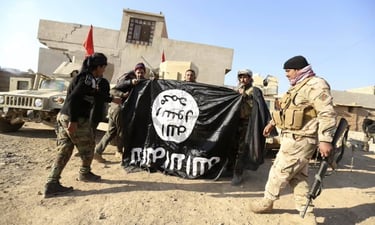
If you listened to Part 1 of Melanie Marshall's conversation with No Ordinary Monday, you'll know she has spent over two decades getting into places most journalists never reach. An MS-13 controlled prison in Honduras. A forward operating base in northern Iraq during the campaign to retake Mosul. Checkpoints across the Middle East that chewed up entire days and occasionally sent her home empty handed.
Part 2 is where she tells her No Ordinary Monday story. And it is something else.
Afghanistan, 2012. Heavy fighting between the Taliban and allied forces. Melanie and her colleague Liz Doucette set off on what she describes as a magical mystery crisscross tour of the country, not seen since the hippies of the sixties and seventies. They were unembedded the whole time, meaning no military escort, no flak jackets, no convoy. Just low profile vehicles, local producers who had been navigating the country since the Soviets left, and the kind of access that only comes from years of building trust with the right people.
The people are the point, as Melanie puts it. The moment you embed with the military, you get removed from them.
The trip took them from Mazar-e-Sharif in the north, where they were hosted by an Afghan forces general who, mid-interview, casually mentioned that a friend had just sent him a poem. It turned out he and this friend exchanged poems back and forth. He was a general who was a poet. That night he put extra security on the guest house to protect Melanie's honour, which she discovered at two in the morning when she woke up to the shadow of a man with an AK-47 outside her bedroom window.
From there they went to a buskashi match, which is essentially polo but with a goat's head instead of a ball, and considerably less decorum. Women don't attend buskashi matches. Melanie and Liz went as honoured guests of the general. They were also assigned four bodyguards who stood directly in front of them, blocking the view entirely. Melanie eventually told them to get out of the way.
Then down to Kandahar, where the rules changed. Ten minutes on the street at a time before the Taliban could mark their position. Not a soft ten, as Melanie makes clear. A hard ten. She was literally pulling one green crew member by his belt back into the car when he ran over. Her reasoning was simple. She would rather he be furious with her than both of them be dead.
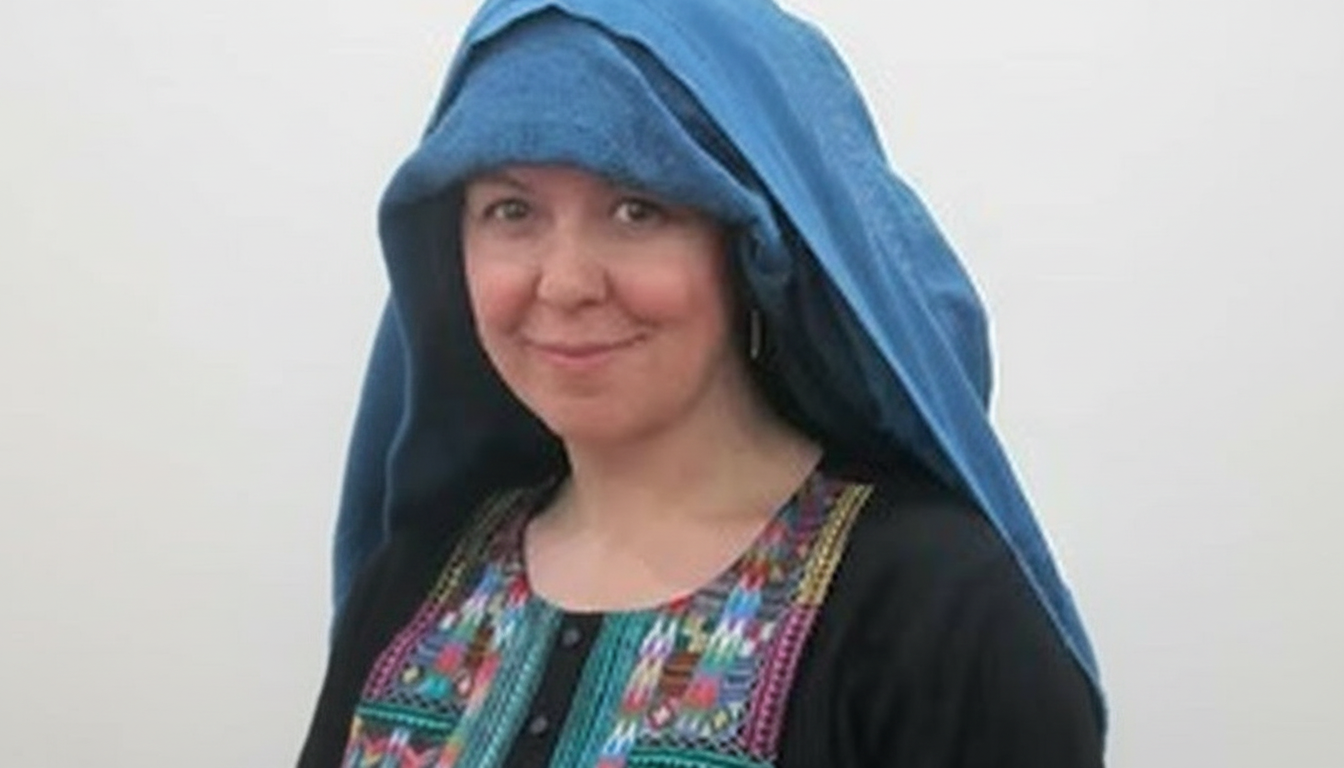
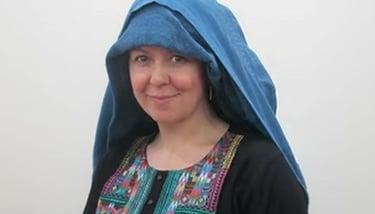
When they were stuck waiting in the compound for things to cool down, she and Liz amused themselves with a burka fashion show, taking photos of each other and sending them to friends asking which one was which. They were safety burkas, she clarifies. Not cross-cultural burkas. If they'd had to move in a hurry, you wouldn't have been able to identify them.
Over in Herat, near the Iranian border, another kind of problem emerged. The cameraman on the trip, a genuinely lovely person by all accounts, had a habit of leaning over to film and revealing what Melanie diplomatically describes as what Americans might know as plumbers crack. Across the country, from Mazar to Kandahar and back, it had become an issue. Modesty matters in Afghanistan. Respect matters. They tried everything. Eventually the local producer Shwaib took the cameraman to the tailor and told him he'd look lovely in a particular outfit. That worked. Their driver Gaffar, who had quietly reached the end of his rope somewhere on a fortress rampart in Herat, had by that point already shouted out in Dari that God should curse these melons from appearing. It is, Melanie says, one of her clearest sense memories from the whole trip.
Then the UN plane broke.
The roads back to Kabul were impassable for foreigners. The team had been on the road for three weeks. People were tired. And then the question became whether to drive.
This is where the story gets serious.
Melanie called one of the NGOs to ask about the road conditions. These are organisations that will take almost any risk to move aid. They told her they weren't doing it. The road wasn't safe enough. But some of the team wanted to go. Three weeks is a long time, and Kandahar to Kabul feels different at the end of a shoot than it does at the start.
There's a rule Melanie lives by in the field. There is no such thing as majority rule. If one person doesn't feel okay, you stop and find another way. The responsibility sits with the producer. She is the one who makes the call.
She wasn't unanimous. She had a bad feeling. She drove anyway. And on the road, in a town they drove through, two vans cut them off. One in front, one behind.
She thought that was it. Very matter of fact, the way it apparently is in those moments. Not panic. Just clarity. This is what is happening now.
It was a traffic jam. The vans pulled away. They got back to Kabul and pulled over just inside the city limits. She told her local producer she thought that was it. He said he thought so too. Neither of them had said a word to each other while it was happening. They just kept going as if it were normal, because out there it was normal.
A month later, three people were found in a garbage bin in that market. The Taliban had left them there as a message.
It changed her, she says. She has never again overridden her own gut.
What Happens to a Person After Two Decades of This
The conversation doesn't stop there. After the Afghanistan story Melanie and Chris get into what two decades of conflict reporting actually does to you, and what you have to believe to keep doing the job.
She is honest about fear. She doesn't think you can do the job properly if fear is the primary thing you're carrying. Not because fear isn't present, but because if it's leading, the story suffers and the people whose stories you're trying to tell get less than they deserve.
But she is also honest about what she has seen. In Syria, at the scene of the first major car bomb to go off in Damascus, she was standing in the aftermath when her mentor Cookie called and told her not to look at anything she couldn't put on the news. She knew immediately that was impossible. She was already looking at it. Then her editor in London called from the morning meeting to ask whether the bomb was real or staged. She was standing watching someone pick up pieces of brain and scalp. She told him it was a real car bomb.
What stayed with her wasn't the call from London. It was a man at the morgue, screaming in grief for his brother. The Arabic phrase he kept repeating translates as what a shame, what a shame, what a shame. That's the part she still hears.
Despite all of it, she doesn't believe humanity is doomed to its darkest impulses. She has seen too much of the other side. In Tunisia, after getting tear gassed in a riot and dropping all three of her phones while running from live fire, two young men she had never met came back for her, picked up the phones, and guided her to a coffee shop two blocks away where someone sat her down and told her to have a cup of tea. She never saw them again.
In Ukraine, she heard about a zookeeper in Odessa who stayed behind with the animals, a giant wolf dog sleeping at the zoo beside him, surrounded by gerbils and cats that people had brought in because they had nowhere else to go. He told someone asking why he was still there that the animals needed him.
There are people like that, she says. The world produces them constantly, in places you'd never expect. Most of the time nobody films them.
For Anyone Who Wants to Follow in Her Footsteps
At the end of the conversation Melanie offers some practical advice for anyone thinking about a career in foreign news, and it is worth passing on.
She thinks the independent space on YouTube and TikTok is where the interesting things are happening now. The economic model for mainstream foreign media has struggled and she is honest about that. But she also doesn't want aspiring journalists doing it for love without a plan. Have good insurance. Pay your bills. Build an ecosystem rather than chasing a staff job that may not exist.
On relationships: don't email someone like her with a CV explaining how great you are. Find out what football team your favourite correspondent supports. That's the way in. For Melanie personally it's rescue animals. She's upfront about that.
On degrees: she doesn't think you need one, though she acknowledges you might want one for other reasons.
On ethos: she still uses BBC editorial standards as her benchmark. Not because they're perfect, but because having a set of principles that other people can see and hold you to matters. You're not a tourist, she says. Know what your red lines are before you get there.
She now runs an independent content and impact studio called Enrama Media and works as a keynote speaker, talking to people about navigating uncertainty. Not so secretly, she adds, she is trying to make everyone hopeful.
Given everything she has seen, that feels like the right job for her.
Want to find out more?
Join the conversation on our socials.
© 2025. All rights reserved.