Ep037:
The War Zone Job Nobody Talks About (1)
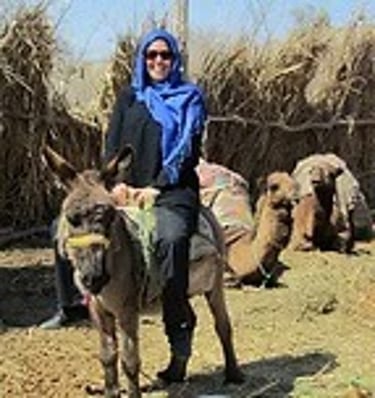
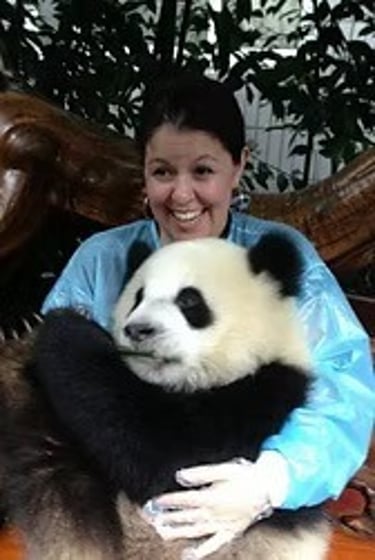
Melanie Marshall spent over 20 years as a BBC foreign news journalist and war correspondent, covering conflict zones most people only ever see on a screen. Afghanistan, Iraq, Yemen, Tunisia, Honduras. Her job was to get the team in, get the story out, and get everyone home. No playbook. Just problem solving under pressure, sometimes under fire.
Most people turn on the news and see two minutes of footage. They don't see what it took to get it. The permissions that fell through. The checkpoints that wouldn't move. The moments where the only way forward was to outlast whoever was in your way.
In this two part conversation Melanie takes us behind the scenes of war zone journalism. From negotiating her way into an MS-13 prison in Honduras, to finding herself alone under mortar fire in northern Iraq, to three weeks unembedded in Taliban controlled Afghanistan on roads so dangerous even the NGOs wouldn't travel them.





Links and Info
WEBSITE: melanieamarshall.com
LINKEDIN: linkedin.com/in/melanie-marshall-237a641
YOUTUBE: youtube.com/@MDMarshall
TIKTOK: @melaniemspeaks
X/Twitter: @mdmarshall
SUBSTACK: substack.com/@imrama
Episode Overview
The War Zone Job Nobody Talks About: Melanie Marshall on 20 Years Behind the BBC Camera
Most people know what a war correspondent looks like. They've seen them on screen, microphone in hand, reporting from somewhere dangerous while the world watches from a safe distance. What most people don't know is that for every correspondent you see, there's someone standing just out of frame who made the whole thing possible. Someone who got the team into the country, sorted the visas, negotiated the access, managed the gear through customs at 2am, and figured out how to get everyone home when the roads turned dangerous. That person is the news producer. And for over 20 years, that person was Melanie Marshall.
Melanie spent two decades working as a BBC foreign news journalist and war correspondent, covering conflicts and crises across Afghanistan, Iraq, Yemen, Tunisia, Honduras and beyond. She sat down with No Ordinary Monday host Chris Baron for a wide ranging conversation about what that job actually looks like from the inside. This is Part 1 of two. Part 2 is where she shares her No Ordinary Monday story.
How a Canadian Kid with a Travel Book Ended Up in War Zones
Melanie grew up circling places in Let's Go travel guides, the kind of kid who was, in her own words, annoyingly curious. She didn't go straight to university. At 18 she was already off travelling Europe on her own, and by the time she eventually made it to journalism school in Toronto, her best friend was already half expecting her to disappear at any moment.
The BBC came into the picture almost by accident. Melanie had been chasing work experience in South Africa and kept calling the BBC bureau in Johannesburg every night until the receptionist finally told the bureau chief he had to speak to this girl. He did. A few days later an email arrived from Martin Turner at BBC.co.uk. The subject line read "The answer is" and the body of the email contained a single word. Yes.
She packed up and moved to Johannesburg. What was meant to be a two month placement stretched to four and a half. Her first major assignment was covering Nelson Mandela in Soweto. She never looked back.
What a War Zone News Producer Actually Does
The producer role in broadcast journalism is one of the least understood jobs in media. Melanie describes it as being responsible for everything that happens before the camera rolls and everything that happens after. You build the team. You sort the logistics, the flights, the visas, the money, the safety plan. You develop the editorial with the correspondent. You work out a schedule, knowing it will never survive contact with reality.
Then you land and your job becomes making it work, whatever it takes.
She uses the Beijing Olympics as an example. A major project, high stakes, expensive gear. She and cameraman Tony Jollof spent the first 12 hours in Beijing customs because officials wanted to seize the camera equipment. Melanie's response was to simply refuse to leave. Politely. Persistently. For 12 hours. Eventually they got tired of her and let the team through.
That strategy, tiring out authoritarian regimes through sheer patience, became something of a signature. As she puts it, she has probably tired out more of them than she has outsmarted.
When a shoot falls apart, the producer is the one who holds it together. On one trip to Nanjing, the team spent an entire day trying to interview a member of the Falun Gong movement, driving around in taxis, booking multiple hotel rooms to throw off surveillance, and watching their interview subject walk past on the street unable to stop because he was being observed. The interview never happened. The cameras never rolled. The day disappeared. That's part of the job too.
Checkpoint Inshallah: The One She Never Got Through
Melanie has spent years getting through checkpoints that most journalists would have turned away from. Her method is simple. Think of the checkpoint as a liminal space. Your job is to get through it. And sometimes you just have to outlast whoever is on the other side.
In Iraq, near Fallujah in the Sunni triangle, she and her Iraqi colleague Latif sat at a checkpoint for four hours trying to get clearance to film. The answer was always inshallah, the Arabic phrase that can mean God willing, maybe, or absolutely not depending on who is saying it and how. They never made it through. It remains one of the few checkpoints in her career that beat her. They gave her tea in the car instead, she notes, which she recognises as exactly the kind of tactic she uses on everyone else.
Inside an MS-13 Prison in Honduras
If Checkpoint Inshallah is the one that got away, the MS-13 prison in Honduras is the opposite. It is probably the trickiest piece of access Melanie has ever negotiated, and it came down to a conversation at a picnic table with a man called Satan.
The prison was controlled by MS-13. The official authorities made it clear that once the BBC team walked past the gate, they were on their own. No protection. No intervention if something happened. What happens inside belongs to them.
Melanie and her colleague Cookie sat down with Satan, the shot caller, and started talking. She had quickly worked out that he understood English before it was translated, so she shifted her approach accordingly, speaking directly to him while going through the translator. She asked about prison conditions, about society, about his experience. The conversation moved. Eventually he agreed to let them film. The price of access was buying items from the handicraft stall he ran inside the prison. They bought a lot of handicrafts.
The Day She Mooned Islamic State
In 2016, during the campaign to retake Mosul from Islamic State, Melanie was embedded with Peshmerga forces at a forward operating base in northern Iraq. The team had pushed forward into an armoured personnel carrier, but there was only room for the correspondent, the camera operator and the trauma medic. Melanie stayed back at the base.
The moment the vehicle left, Islamic State started mortaring the base.
She sat alone in an armoured vehicle, texting a presenter friend because there was nobody else she could tell. Eventually the mortaring calmed down. Then came a more pressing problem. Nature called.
The base had a men's trench and a women's trench. The men's trench was close to cover. The women's trench was positioned so far back from the base that it was completely exposed. With no alternative, Melanie made her way out to it.
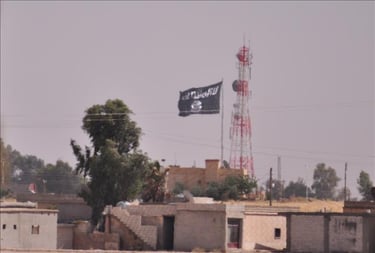
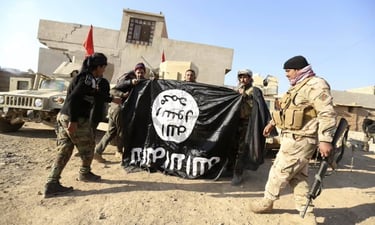
It was only when she got there that she looked up and saw, in a neighbouring town that had not yet been liberated, the black flag of Islamic State flying over the rooftops.
Her words: "My beautiful white butt cheeks are exposed. These jerks have ravaged this land. They killed a friend of mine. I am mooning Islamic State."
She laughed about it when the team came back. Her story barely made the cut in the debrief that followed, given everything else the team had been through that day. But it has stayed with her. And now it has stayed with us too.
What 20 Years of War Zone Journalism Actually Teaches You About the World
One of the more surprising things about Melanie Marshall is that two decades in the world's most dangerous places left her more hopeful about the world, not less. She says the thing most people don't understand about conflict zones is that you experience the kindness of people as much as the fear. The humanity is always there alongside everything else.
She is also candid about the state of news journalism today. She thinks the industry has a problem with showing the world only on its worst days, competing to find the scariest, most apocalyptic story rather than giving people the context they actually need. Her advice for consuming news is to read widely, including sources you disagree with, find journalists you trust, and remember that what you see on screen is a tiny fraction of what is actually happening.
She quotes a mentor, a correspondent she calls Cookie, who used to remind her: "Marshall, we're lucky if they know what channel they're watching." It's a line that stuck. The job was never about the journalist. It was always about the story.
Part 2: Afghanistan, 2012
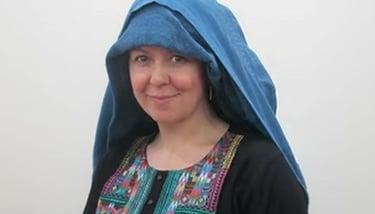
This is only the first half of Melanie's conversation with No Ordinary Monday. Part 2 is her No Ordinary Monday story, and it is something else. Three weeks unembedded in Taliban-controlled Afghanistan, crisscrossing the country in burkas, on roads so dangerous that even the NGOs who take almost any risk to move aid wouldn't travel them. What Melanie decided to do at the end of those three weeks is something that still gives her a pit in her stomach to this day.
Part 2 is out next week. Make sure you're subscribed so you don't miss it.
Want to find out more?
Join the conversation on our socials.
© 2025. All rights reserved.