Ep029:
The White Island Recovery Operation
What does a 4% chance of death really mean?
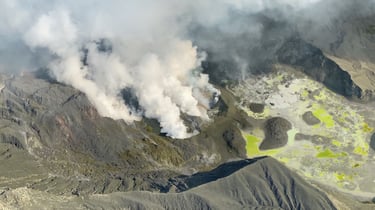
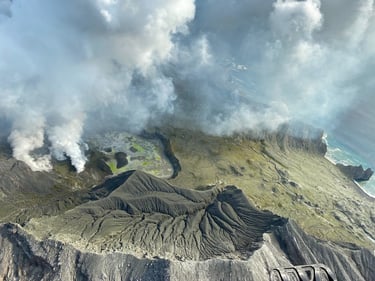
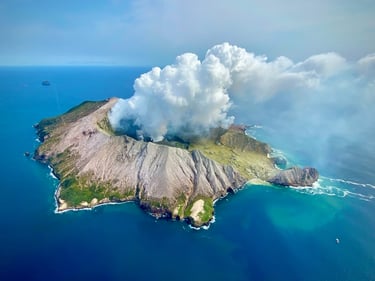
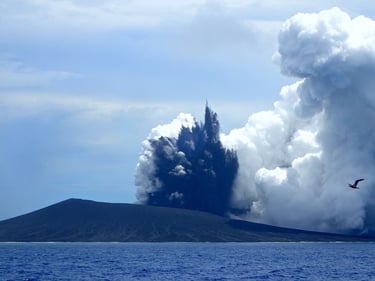
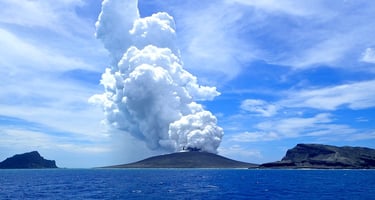
In Part Two, we return to Whakaari / White Island and step inside the decision that shaped the recovery operation. When scientists estimated a 4% probability that someone could die during a three-hour mission on the island, the conversation shifted from “Is it safe?” to something far harder: is this risk acceptable?
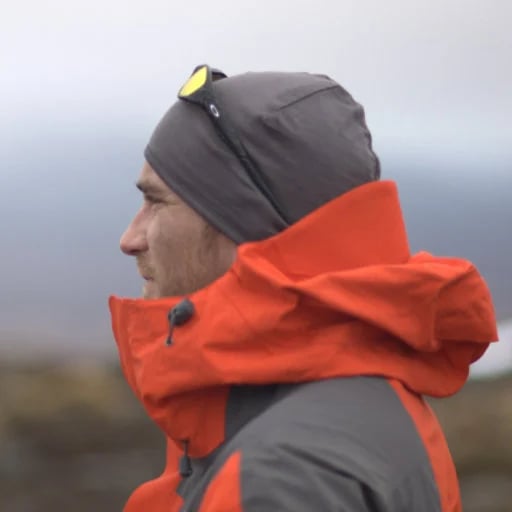
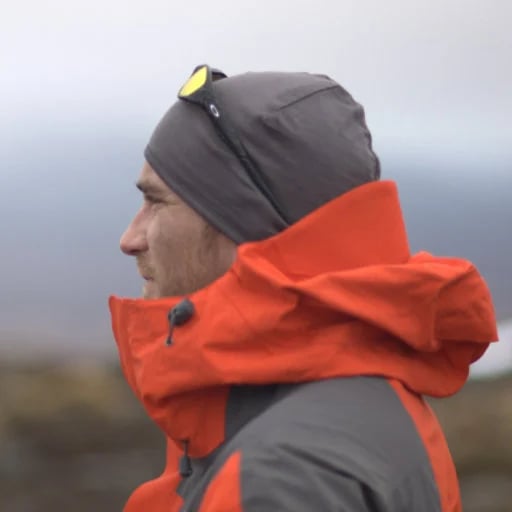
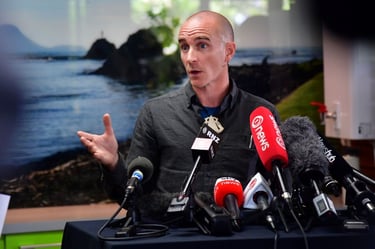
Nico Fournier explains how that number was built, how volcanologists communicate uncertainty to police and government in real time, and why risk tolerance — not just risk itself — determines action. From volcano tourism and legal fallout to forecasting successes in Montserrat and supervolcano risk at Lake Taupō, this is a candid look at high-stakes decision-making where science offers probabilities, not guarantees — and where good process doesn’t always mean good outcomes.





EPISODE OVERVIEW
The 4% Decision: Risk, Responsibility, and Living With Uncertainty
What does a 4% chance of death really mean?
It sounds small. Until you imagine going to work knowing there’s a four-in-one-hundred chance you won’t come home.
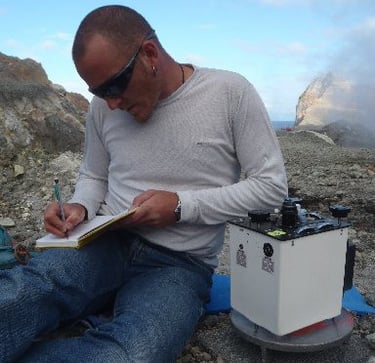
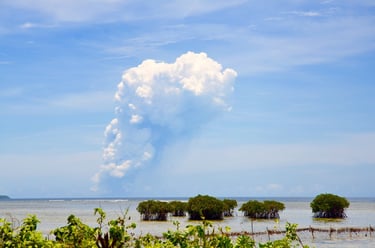
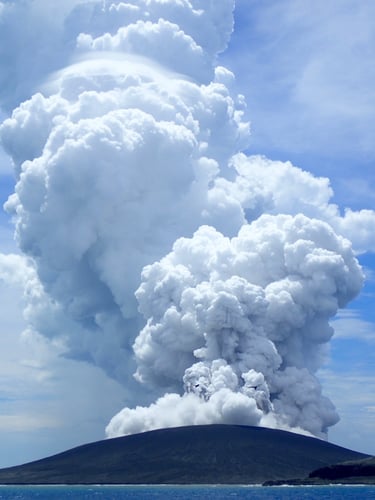
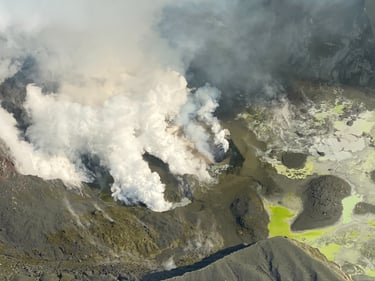
In Part Two of my conversation with volcanologist Nico Fournier, we step inside one of the most difficult decisions made in the aftermath of the 2019 Whakaari / White Island eruption. Recovery teams were preparing to return to the crater. The volcano remained active. The data was incomplete. Families were waiting.
And the scientists were asked a question that sounds simple, but never is:
Is it safe?
From “Safe” to “Acceptable”
One of the most powerful moments in our conversation comes when Nico reframes that question.
“Is it safe?” is actually two questions.
What is the risk?
And is that risk acceptable?
Those are very different things.
Using a structured process known as expert elicitation — where specialists pool their independent assessments into a single probability with defined uncertainty — Nico and his colleagues estimated that during the first three-hour recovery operation, the risk of one team member being killed in another eruption was around 4%.
On one hand, 4% doesn’t sound catastrophic. On the other, it’s enormous.
Most employers would never tolerate that level of risk. Most people wouldn’t accept it for a routine day at work. But this wasn’t routine. This was a mission to bring loved ones home.
And that’s where risk tolerance enters the conversation.
The level of risk hadn’t changed. The stakes had.
Individual Risk vs Societal Risk
Nico makes a distinction that feels increasingly relevant in a world of adventure tourism and extreme environments.
There is individual risk — the risk I choose to take when I climb a mountain, surf a reef, or hike a volcano.
And there is societal risk — the risk that comes when hundreds of people are allowed into a hazardous environment every day.
Those two forms of risk require different decisions, and different accountability.
When hundreds of tourists visit an active volcano daily, the calculation changes. It is no longer just about personal choice. It becomes a question of governance, responsibility, and thresholds.
And that’s where the legal inquiries following Whakaari enter the picture.
In the years since the eruption, investigations have examined the responsibilities of tour operators, government agencies, and even scientists themselves. For the global volcanology community, it marked a watershed moment. The role of scientific advice — and how it is documented and communicated — came under intense scrutiny.
One of Nico’s biggest learnings? Advice must be actionable.
The goal isn’t to provide the most sophisticated analysis. It’s to provide guidance that has a landing place — something decision-makers can actually use.
When Science Works — And When It Doesn’t
Forecasting volcanic eruptions is part science, part pattern recognition, and part humility.
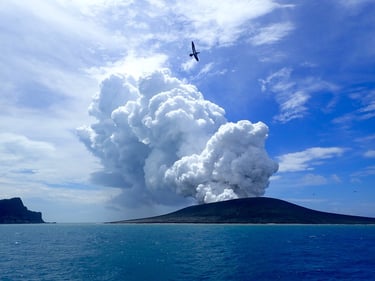
Nico shares a remarkable story from his time in Montserrat, where he and his colleagues were able to correlate seismic signals with eruption patterns so precisely that he could almost predict an eruption to the minute.
But that confidence didn’t last.
Soon after, the volcano’s behaviour shifted. The signals no longer correlated. The models stopped lining up with reality. The team found themselves back where volcanologists often are — watching thermal cameras through the night, trying to understand where pyroclastic flows were heading, and deciding whether to evacuate communities based on expert judgement rather than certainty.
And when they evacuated residents before a major eruption — successfully — they were treated as heroes.
But Nico poses a harder question:
What if they had evacuated, and nothing happened?
Would it still have been the right decision?
This is perhaps the deepest philosophical lesson from our conversation:
You cannot judge the quality of a decision purely by its outcome.
Good process can still produce bad days.
Lucky escapes can follow poor judgement.
The integrity lies in the process — not the headline.
Living Near Risk
As our conversation widens, we move beyond Whakaari to Lake Taupō, supervolcanoes, and the broader global conversation about volcanic tourism.
Supervolcanoes capture imagination — entire hemispheres at risk. But Nico reframes them too. These are volcanoes capable of massive eruptions, yes. But most periods of unrest don’t lead to catastrophe. And most eruptions are far smaller than the apocalyptic scenarios people imagine.
The more interesting conversation is not whether risk exists — it always does — but how we talk about it.
Volcanic tourism, he argues, is probably unavoidable. Humans are drawn to volcanoes. We always have been. The question is how to engage in meaningful conversations about risk before disaster forces the issue.
And there’s something else.
Living in places like New Zealand, Indonesia, or the Caribbean — regions shaped by earthquakes, eruptions, and cyclones — builds resilience. It forces communities to confront uncomfortable truths. It teaches preparedness. And in the worst moments, it often reveals the best in people.
The Legacy of a Volcanologist
When I ask Nico about legacy, he doesn’t talk about monuments or major scientific breakthroughs.
He talks about leaving a culture behind that is courageous enough to have hard conversations.
To talk openly about unacceptable risk. To plan for events that feel unlikely. To embrace dialogue rather than avoid it. Because not thinking about it is not an option.
The Real Meaning of 4%
That number — 4% — lingers.
It represents more than probability. It represents the uncomfortable space between data and decision. Between science and humanity.
In the end, volcanology isn’t just about magma and seismic waves. It’s about people. About how we weigh danger against duty. About how we live in landscapes that can change without warning.
And about whether we’re willing to look uncertainty in the eye — and still act with integrity.
If this conversation resonated with you, you can listen to the full episode on No Ordinary Monday.
And if you want to support the global volcanology community, consider learning more about IAVCEI — the International Association of Volcanology and Chemistry of the Earth’s Interior — and the work being done to connect and support observatories around the world.
Because the ground will move again.
The question is whether we’re ready — not just scientifically, but collectively — when it does.
Want to find out more?
Join the conversation on our socials.
© 2025. All rights reserved.