Ep028:
The White Island Recovery Operation
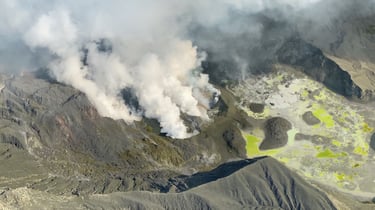
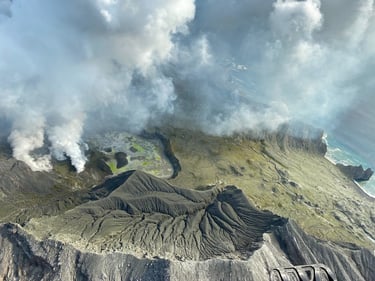
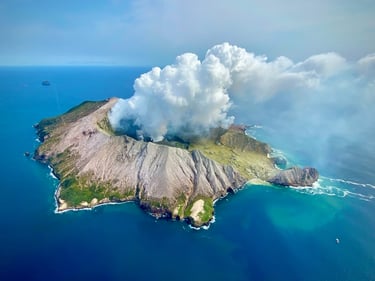
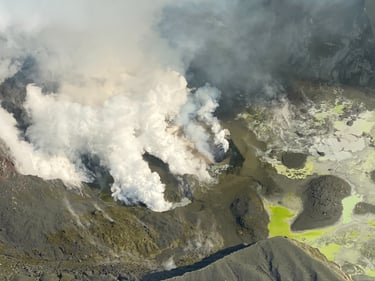
At 2:11 p.m., a phone call confirmed what no one wanted to hear, Whakaari / White Island Volcano had erupted with tourists on the crater floor. In the immediate aftermath, attention turned not only to what had happened, but to what might happen next. The volcano remained active and unstable, its behaviour uncertain. Yet families were waiting for news, and recovery teams were preparing to return.
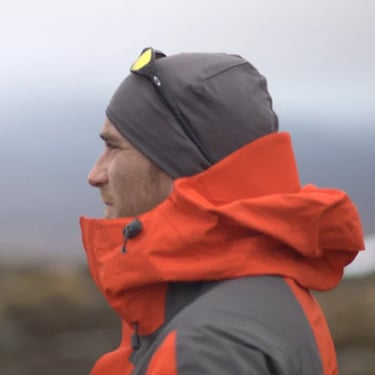
In this episode, we step inside the critical days that followed. Nico Fournier explains how seismic data, gas emissions, ground deformation, and real-time monitoring shaped the assessment of whether it was safe to go back. With incomplete information and no clear guarantees, expert judgement became the safety threshold. It’s a rare look at decision-making under extreme uncertainty, where science offers probabilities, not certainties, and the weight of every call is measured in human lives.





EPISODE OVERVIEW
When Science Has to Decide: Inside the White Island Recovery
At 2:11 p.m. on a warm Monday afternoon in December 2019, Whakaari / White Island erupted.
Within hours, the story had travelled the world. Tourists had been walking inside the crater of an active volcano. Twenty-two people would ultimately lose their lives. Some were evacuated in extraordinary acts of bravery by tour operators and helicopter pilots who flew back into danger. Others remained on the island.
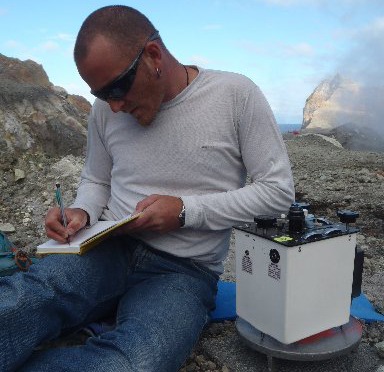
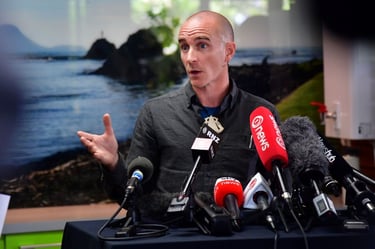
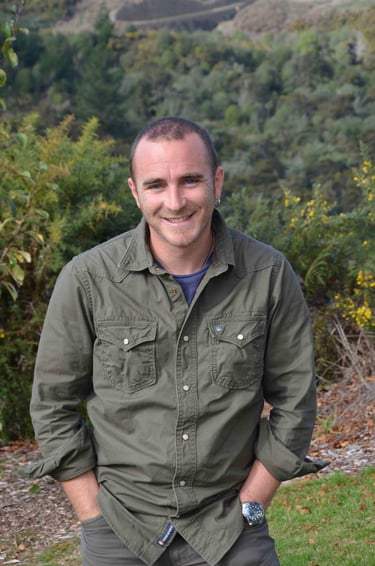
For volcanologist Nico Fournier, the eruption wasn’t just a headline. It was a phone call received while driving back from a routine meeting. “Whakaari has erupted,” his colleague told him. The next question came immediately: Were there people on the island?
There were.
From Volcanoes to Communities
Nico didn’t come to volcanology chasing danger. He grew up in central France, surrounded by dormant volcanoes so ordinary they barely registered as remarkable. His early fascination was scientific — the complexity, the nonlinearity, the puzzle of understanding how magma moves and pressure builds.
But somewhere along the way, his focus shifted.
“I came to volcanology for the volcanoes,” he says. “I stayed for the people.”
That distinction matters. Volcanoes are spectacular, yes. But they are also homes, livelihoods, sacred spaces, tourist destinations. The relationship between a community and a volcano is never simple. It’s fertile land and existential threat. Cultural identity and geological risk.
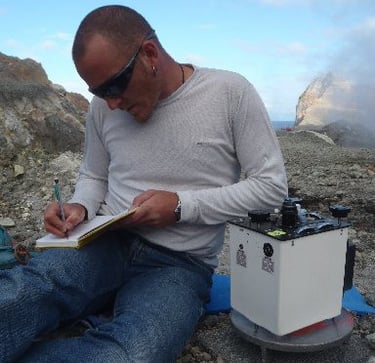
By 2019, Nico’s role had evolved far beyond fieldwork. He describes himself as a connector — someone who sits between data and decision-makers, translating seismic tremors, gas readings, and deformation patterns into guidance that police, military leaders, and government officials can act on.
In the days following the eruption, that role would become central.
The Question No One Wants to Ask
By late afternoon on the day of the eruption, it was clear: there were no survivors left on the island.
Rescue had become recovery.
But the volcano wasn’t finished. Underground signals showed activity increasing. Seismic tremor was rising. The patient — to use Nico’s medical analogy — was not stabilising. It was agitated.
And yet, eight bodies remained inside the crater.
When Nico walked into the operations room the next morning, conversations stopped. Faces turned toward him.
“Is it safe to go?”
It is an impossible question. Safety is rarely absolute in volcanology. It is probability. It is judgement. It is experience distilled into instinct.
At the same time, families were waiting. Some Nico would later sit with personally, laptop open on his knees, explaining why they could not yet send teams back in. Not in technical language. Not geeking out on seismic graphs. But translating what rising underground unrest meant in human terms.
He describes being struck by the humanity in those rooms — by people deep in grief who could still nod and say, “We understand,” even if they wished the answer were different.
Writing the Rulebook in Real Time
There was no manual for what came next.
Over three intense days, Nico and a multidisciplinary team built a recovery plan from scratch. Military personnel, police specialists, fire and emergency drone operators, seismologists, gas experts — each brought their expertise. Nico’s job was to integrate it, weigh uncertainty, and help define the risk threshold.
He asked his most experienced seismologist to monitor the data in real time during the operation.
“What’s the threshold for calling you?” the colleague asked.
Nico’s answer wasn’t a number.
“When it makes you sick in the stomach.”
Not superstition. Not guesswork. But decades of pattern recognition compressed into intuition — that subtle shift when the data feels wrong before you can fully articulate why.
The Recovery
On the first recovery operation, Nico stood on a Navy vessel offshore, eyes fixed on the crater through heavy optics and infrared equipment. He monitored the volcano continuously while teams in full breathing apparatus moved across the island below.
The conditions were punishing. Rough seas. Little sleep. The physical toll of scanning a live crater for hours at a time. He admits he spent much of the day seasick — vomiting between updates — but never once looking away.
Because if the volcano reawakened, he would be the one to pull the plug.
Six of the eight remaining victims were recovered that day with extraordinary precision and respect. The operation involved inflatable boats, helicopter lifts, drone reconnaissance, and meticulous identification procedures.
Two individuals, however, could not be found.
A second recovery effort followed. Through seismic reconstruction and weather data, the team concluded that intense rainfall the night after the eruption likely triggered mudflows in narrow gullies, carrying the final two victims out to sea.
It was a devastating realisation — but one grounded in evidence.
Beyond Science
What lingers most in Nico’s telling isn’t the logistics. It’s the people.
The local iwi (tribe) who blessed the island before recovery teams went in. The cultural leaders who supported families. The annual ceremonies that mark the anniversary. The quiet dignity of communities holding one another through grief.
Five years on, the eruption remains a defining moment in his career — not because of the scale of the disaster, but because of what it revealed about responsibility.
Volcanology is not about standing on crater rims chasing spectacle. It is about judgement under uncertainty. About knowing when not to act. About explaining risk to people who desperately want certainty.
And sometimes, it is about being the person in the room who has to answer the hardest question of all:
Is it safe to go?
Want to find out more?
Join the conversation on our socials.
© 2025. All rights reserved.